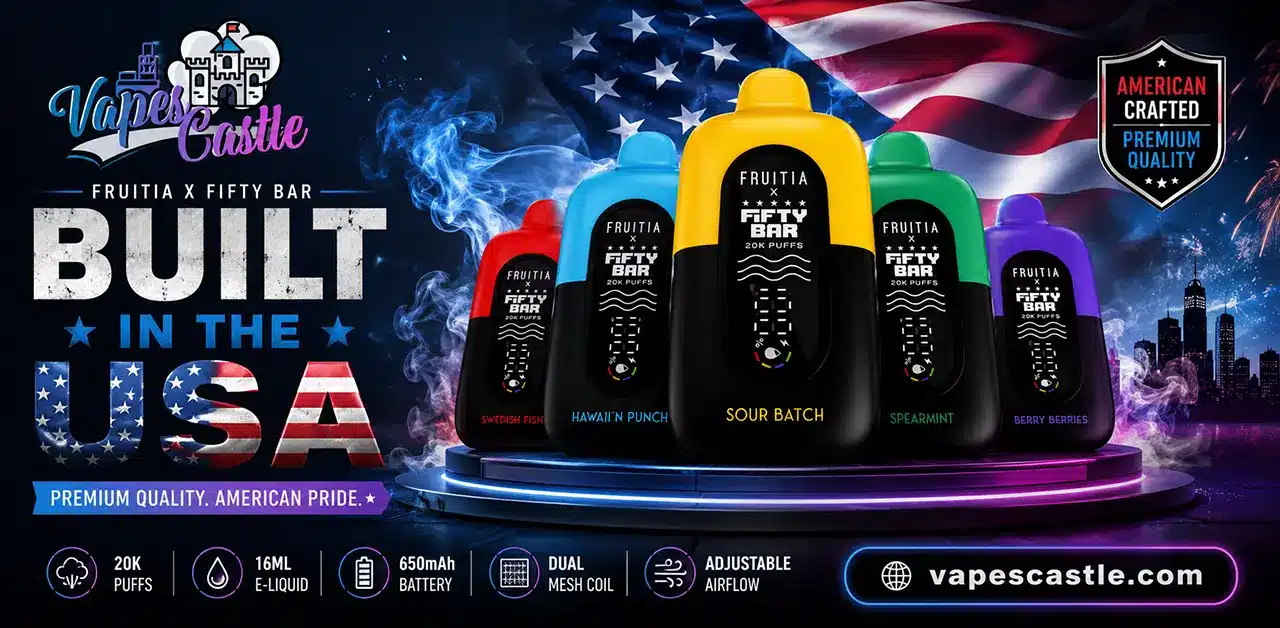
“Built in the USA” vaping refers to vape devices, e-liquids, and hardware components that are manufactured under U.S. federal and state oversight, using FDA-regulated ingredients and domestic quality-control standards. This label matters because it directly affects product safety, ingredient transparency, and legal accountability – three things that imported or unregulated vape products often can’t guarantee.
If you’ve ever compared two nearly identical vape pens – one stamped “Made in USA” and one with no origin label at all, you’ve probably wondered if the difference is just marketing. It isn’t. The manufacturing origin of a vape product shapes everything from the metals in its coil to the legal recourse you have if something goes wrong.
What Does “Built in the USA” Actually Mean for Vapes?
A vape product labeled “Built in the USA” must meet the Federal Trade Commission’s (FTC) “Made in USA” standard, which requires that “all or virtually all” of the product be made domestically, including significant parts, processing, and labor. For vaping specifically, this typically means:
- The device is assembled in a U.S.-based facility
- E-liquids are mixed and bottled under FDA-registered conditions
- Nicotine and flavoring ingredients meet U.S. purity standards
- Batteries and heating elements pass domestic safety testing
This is different from a product simply being “sold in the USA” or “distributed by” a U.S. company – phrases that often mask overseas manufacturing with little oversight.
Why Manufacturing Origin Affects Vape Safety
Stricter Ingredient Sourcing
U.S.-based e-liquid manufacturers are required to register with the FDA under the Deeming Rule and disclose ingredient lists through Premarket Tobacco Product Applications (PMTAs). This means every nicotine salt, flavoring compound, and base liquid (PG/VG) used in an American-made e-liquid has passed through a documented approval or review pathway.
Imported e-liquids, by contrast, often bypass this process entirely. Independent lab testing has repeatedly found unlisted contaminants – including diacetyl, heavy metals, and diluents – in unregulated overseas vape juice, since there’s no domestic authority verifying what’s actually in the bottle.
Battery and Hardware Safety Standards
Vape device fires and battery failures are almost always traced back to substandard lithium-ion cells or poor circuit protection. U.S. manufacturers sourcing and assembling hardware domestically are subject to Consumer Product Safety Commission (CPSC) oversight and UL-style safety testing expectations, which imported no-name devices frequently skip.
Quality Control Consistency
Domestic production facilities operate under Good Manufacturing Practice (GMP) guidelines enforced by U.S. regulators. This creates batch-to-batch consistency – the same flavor or nicotine strength you buy today should match what you buy next month. Overseas facilities without equivalent oversight often show significant variance between batches.
Built in the USA vs Imported Vapes: Key Differences
| Factor | Built in the USA | Imported (Unregulated) |
| FDA ingredient oversight | Required | Often absent |
| Battery safety testing | CPSC-aligned standards | Inconsistent or none |
| Legal accountability | U.S. courts, traceable manufacturer | Difficult to pursue overseas |
| Ingredient transparency | Disclosed formulations | Frequently undisclosed |
| Batch consistency | GMP-regulated | Variable |
| Recall mechanisms | FDA/CPSC recall systems apply | Rarely enforceable |
Why Legal Accountability Matters More Than People Realize
When a vape product is manufactured overseas by an entity with no U.S. business presence, there’s often no practical way to pursue a claim if a device malfunctions, injures someone, or contains mislabeled ingredients. American manufacturers, by contrast, are legally domiciled entities – subject to U.S. product liability law, FTC advertising rules, and FDA enforcement action.
This accountability isn’t just theoretical. The FDA has issued warning letters and market withdrawal orders against domestic manufacturers for non-compliant products – a process that simply doesn’t apply to companies operating entirely outside the U.S. jurisdiction.
Does “Built in the USA” Mean a Vape Is Automatically FDA-Approved?
No. As of 2026, the FDA has not “approved” e-cigarettes in the way it approves pharmaceuticals. Instead, eligible vape products go through an FDA marketing authorization process (via PMTA review), meaning the agency has assessed the product and determined it’s “appropriate for the protection of public health” enough to remain on the market. Being built in the USA increases the likelihood a product has entered this review pipeline – it isn’t a guarantee of authorization on its own. Always check whether a specific product has received FDA marketing authorization rather than assuming domestic origin alone confirms it.
How to Verify a Vape Product Is Genuinely Made in the USA
- Check for FDA registration numbers on the packaging or manufacturer’s website.
- Look for a physical U.S. manufacturing address, not just a distribution or headquarters address.
- Search the FDA’s PMTA product list to confirm the specific SKU has been submitted or authorized.
- Read the ingredient disclosure – domestic e-liquids typically list PG/VG ratio, nicotine source, and flavoring compounds.
- Avoid vague labeling like “USA-inspired,” “American style,” or “distributed in the USA,” which don’t meet the FTC’s Made in USA threshold.
FAQs
Is “Made in USA” vaping safer than imported vaping?
Generally, yes – because U.S. manufacturing requires FDA ingredient oversight, CPSC-aligned battery safety expectations, and GMP consistency standards that many imported, unregulated vapes don’t undergo.
Are all vapes sold in the U.S. made domestically?
No. Many vapes sold in U.S. stores are manufactured overseas and only packaged, labeled, or distributed by a U.S.-based company, which does not meet the FTC’s “Made in USA” standard.
Does domestic manufacturing eliminate all vaping health risks?
No. Vaping still carries inherent health risks regardless of manufacturing origin. “Built in the USA” affects product safety and quality control – it does not make vaping risk-free.
How can I tell if a vape brand is truly American-made?
Check the manufacturer’s FDA registration, confirm a real U.S. manufacturing address, and cross-reference the product against the FDA’s PMTA submission list.
Why do some vape brands only say “USA-based company” instead of “Made in USA”?
Because “USA-based company” can legally describe a business headquartered in the U.S. while manufacturing occurs overseas – a common way to imply domestic quality without meeting the FTC’s actual Made in USA labeling requirements.
Conclusion
“Built in the USA” isn’t just a patriotic marketing phrase it’s a proxy for a specific set of regulatory, safety, and legal protections that imported or unregulated vape products frequently lack. From FDA ingredient oversight to CPSC battery standards to enforceable legal accountability, domestic manufacturing changes the entire risk profile of a vaping product. Before buying, verify the manufacturing origin directly rather than relying on packaging language alone – the difference between “Made in USA” and “sold in the USA” can be the difference between a regulated product and an unregulated one.